A fresh coat of paint, new wallpaper, built-in shelving, or updated furniture can completely transform a room.
But before investing time and money into redecorating, it is worth paying attention to something homeowners can easily overlook: what may be happening inside the wall itself.
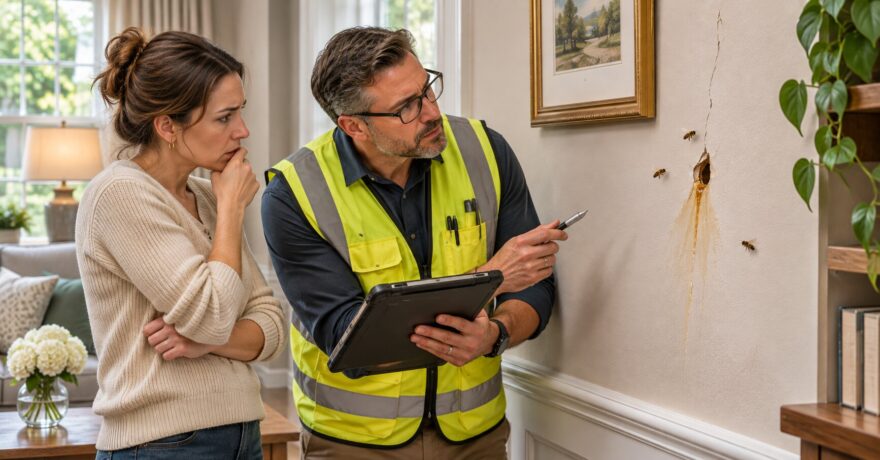
Honeybees can establish colonies inside wall cavities, soffits, rooflines, and other protected structural spaces without creating obvious damage on the surface. From inside the room, everything may look normal.
Then you hear buzzing.
Or you notice bees repeatedly appearing near one window.
Perhaps an amber-colored stain begins forming on the drywall.
These signs may indicate something more complicated than a few insects wandering into the house.
A hidden hive could be behind the wall.
Why Bees Choose Wall Cavities
Honeybees naturally look for sheltered spaces where a colony can build comb and remain protected from weather and disturbance.
Homes can provide many of those conditions.
A relatively small exterior opening may lead into a much larger cavity inside the structure.
Potential entry points include:
- Cracks in stucco
- Gaps around exterior trim
- Utility penetrations
- Plumbing openings
- Electrical conduit
- Vents
- Roof transitions
- Fascia and soffits
- Gaps around windows
The exterior opening may be only a small part of the problem.
Once bees enter, they may travel farther into the structure before establishing their colony.
That means the place where you see bees entering outside may not be directly behind the part of the wall where the honeycomb is located.
Listen Before You Redecorate
One of the earliest clues of a concealed colony can be sound.
A homeowner may hear faint buzzing from:
- Behind drywall
- Near the ceiling
- Around a window
- Inside a closet
- Behind built-in cabinetry
- Near an exterior wall
The sound may be more noticeable during warmer portions of the day when bee activity increases.
Occasional buzzing does not automatically mean a hive is present, but repeated sound from the same section of wall deserves attention.
If you are planning to install wallpaper, shelving, paneling, or other permanent finishes, it is better to investigate first than discover a colony after the work is complete.
Watch the Exterior Side of the Wall
If you suspect bees may be inside, step outside and observe the corresponding area from a safe distance.
Look for bees that:
- Approach the same section of the house repeatedly
- Enter through one small opening
- Leave from the same location
- Follow a consistent flight path
- Continue the behavior throughout the day
Repeated traffic is much more meaningful than seeing one bee around flowers or landscaping.
If bees are continuously entering the same opening, professional bee removal Orange County services can help determine whether an established colony is inside the structure.
Bees Appearing Indoors Can Be Another Warning Sign
Sometimes homeowners first realize something is wrong when bees begin appearing inside the house.
They may show up near:
- Windows
- Light fixtures
- Ceiling vents
- Bedrooms
- Hallways
- Bathrooms
- Attic openings
One bee indoors can happen for many reasons.
Repeated indoor activity, especially when combined with buzzing or exterior traffic, may indicate that bees are moving through connected structural spaces.
If the colony is inside a wall, homeowners can learn more about professional bee removal from walls in Orange County.
Honey or Amber Stains Are Especially Important
A hidden hive does not only contain bees.
An established colony may build honeycomb and store honey inside the cavity.
If comb becomes damaged or begins leaking, homeowners may notice:
- Amber stains
- Brown discoloration
- Sticky residue
- Drips on drywall
- Ceiling stains
- Marks near baseboards
These signs should not simply be covered with paint or wallpaper.
If honey remains inside the wall, redecorating over the visible stain may only hide the symptom.
The source still needs to be addressed.
What Happens to the Honeycomb After Bee Removal?
This is one of the most important questions homeowners can ask.
Removing the active bees does not necessarily remove everything the colony built.
Inside a wall cavity there may still be:
- Honeycomb
- Honey
- Wax
- Pollen
- Propolis
- Brood material
- Other hive debris
Depending on the situation, leaving substantial hive material behind can contribute to odors, staining, ants, wax moth activity, or renewed interest from scout bees.
For established structural hives, professional honeycomb removal and structural cleanup may be appropriate after the active colony has been addressed.
Why This Matters Before Installing Wallpaper
Wallpaper can dramatically change the feel of a room.
Heritage Fine Furniture has previously explored how decorative wall treatments such as Scalamandré wallpaper can transform a home.
But before applying an expensive wall finish, the drywall underneath should be dry, stable, and free from unresolved structural problems.
If honey is leaking through a wall or the cavity needs to be opened for hive cleanup, wallpaper installed beforehand may have to be removed.
The same applies to:
- Decorative paneling
- Custom millwork
- Built-in shelving
- Accent walls
- Large mirrors
- Wall-mounted entertainment systems
Taking care of the hidden problem first protects the investment you are making in the room.
Protect Furniture Before Wall Access Begins
If part of a wall must be opened to reach honeycomb, prepare the surrounding room before work begins.
Move nearby:
- Sofas
- Chairs
- Tables
- Rugs
- Lamps
- Artwork
- Electronics
- Curtains
- Decorative objects
away from the immediate work area.
Even when the bee problem itself is contained, opening drywall or another structural surface can create dust and debris.
Covering or relocating furnishings makes cleanup much easier.
Do Not Simply Seal the Exterior Opening
Once homeowners identify where bees are entering, the instinct may be to fill the hole immediately.
That can create another problem.
If an active colony remains inside the wall, sealing its normal entrance may trap the bees.
They may begin searching for another route through the building.
Depending on the construction, that could direct them toward:
- Interior walls
- Ceiling openings
- Vents
- Light fixtures
- Attics
- Garages
- Living areas
The colony should be addressed before the entrance is permanently sealed.
When Structural Access Is Necessary
Not every bee infestation requires opening a large section of wall.
The amount of access depends on the colony location and how much hive material is present.
Sometimes the necessary access may involve only:
- A small section of drywall
- Exterior stucco
- Soffit material
- Trim
- Part of a ceiling
The objective should be to reach the colony and hive material as directly as possible without creating unnecessary damage.
After the bee-related work is complete, the surface can be repaired and redecorated.
Repair the Wall Before Decorating
Once cleanup is finished, make sure the structural repair is complete before moving on to the decorative phase.
That may involve:
- Drywall replacement
- Patching
- Stucco repair
- Priming
- Painting
- Texture matching
- Trim replacement
This is also a good time to make sure the original exterior entrance has been addressed.
Otherwise, another colony may eventually investigate the same cavity.
Why Bees Sometimes Return to the Same Wall
Homeowners sometimes experience bee activity in the same location more than once.
There can be several reasons.
The original entry point may still be open.
The cavity may continue providing good shelter.
Old hive material or odors may remain.
Scout bees may investigate a location that previously supported a colony.
That is why the long-term solution often involves more than simply removing the bees.
It may include:
Removal → cleanup → repair → exclusion.
Bee-Proofing After the Wall Is Repaired
After the active colony and honeycomb have been addressed, the exterior opening should be evaluated.
Potential entry points may include:
- Stucco gaps
- Utility penetrations
- Exterior trim
- Soffits
- Fascia
- Pipe openings
- Conduit gaps
- Roof transitions
Professional bee-proofing services in Orange County can help reduce access to vulnerable structural cavities.
Heritage Fine Furniture has also previously shared tips for keeping bees out of the home.
The important distinction is that exclusion should occur after an active colony has been handled, not while bees remain trapped inside.
What About Wasps?
Not every insect entering a wall cavity is a honeybee.
Wasps may also use:
- Exterior gaps
- Eaves
- Soffits
- Wall voids
- Attics
- Other concealed spaces
Correct identification matters because professional bee and wasp removal methods may differ depending on the insect and nest location.
Heritage Fine Furniture has previously discussed when and how bee and wasp removal may be necessary.
Signs You Should Investigate Before Decorating
Before beginning a major wall makeover, pay attention to these warning signs:
- Repeated buzzing behind a wall
- Bees entering one exterior opening
- Bees appearing indoors
- Honey-colored stains
- Sticky residue
- Unusual odors
- Ant activity around one section of wall
- Previous bee activity in the same location
- Cracks or gaps around exterior penetrations
One of these signs alone does not always prove a hive exists.
Several occurring together make professional evaluation much more worthwhile.
What to Ask Before the Wall Is Closed Again
If the wall has been opened for bee removal or cleanup, ask a few questions before repairs are finalized:
- Has the active colony been removed?
- Is honeycomb still inside?
- Was leaking honey cleaned up?
- Is additional hive material present?
- Has the original bee entrance been identified?
- Will the exterior opening be repaired?
- Is the cavity ready to be closed permanently?
It is far easier to answer these questions while the area is accessible than after new drywall, paint, wallpaper, or cabinetry has been installed.
Make the Wall Healthy Before Making It Beautiful
Interior design works best when the structure beneath it is sound.
A beautifully wallpapered accent wall or carefully designed living room will not stay beautiful if hidden honey begins staining the surface later.
That is why unexplained buzzing, repeated bee traffic, or honey-colored staining should be investigated before redecorating.
Address the colony first.
Remove remaining hive material when necessary.
Repair the structure.
Then protect the former entrance against future colonies.
After that, you can move ahead with paint, wallpaper, furniture, artwork, and other design improvements knowing the wall behind them has been properly addressed.
The Bee Man has served Orange County since 1977 and provides professional bee removal Orange County,beehive removal, structural hive cleanup, and bee-proofing throughout the communities it serves.
If you suspect bees may be living behind a wall before your next decorating project, contact The Bee Man at (949) 455-0123 before covering the problem with a new finish.